
Endemic to the Bela Krajina karst
Black olm
Proteus anguinus parkelj
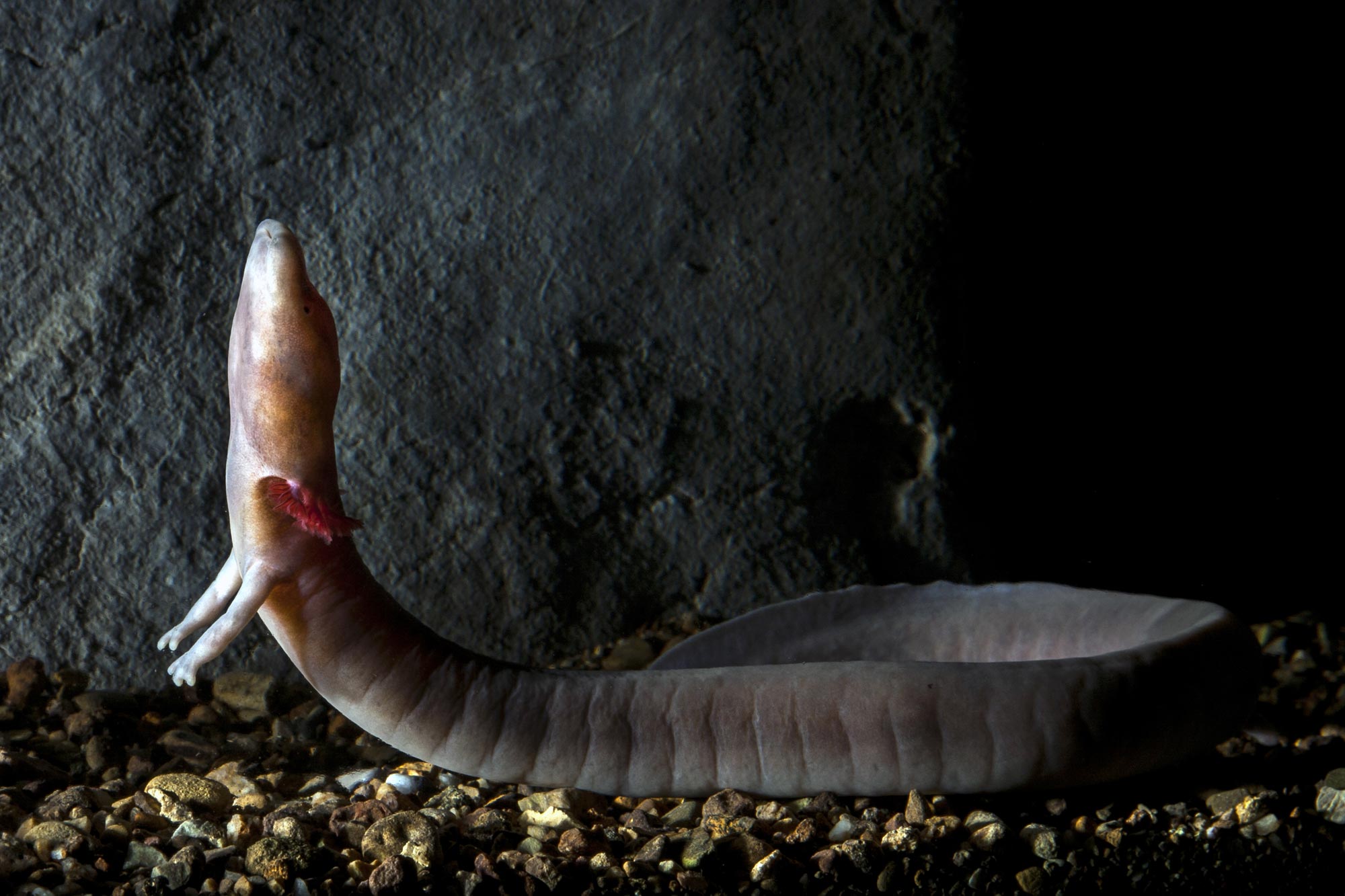
The black olm is one of the rarest cave vertebrates in Europe. This page brings together the core information from the black olm project: from its discovery and biology to the vulnerability of its habitat and the work of the info centre in Jelševnik.
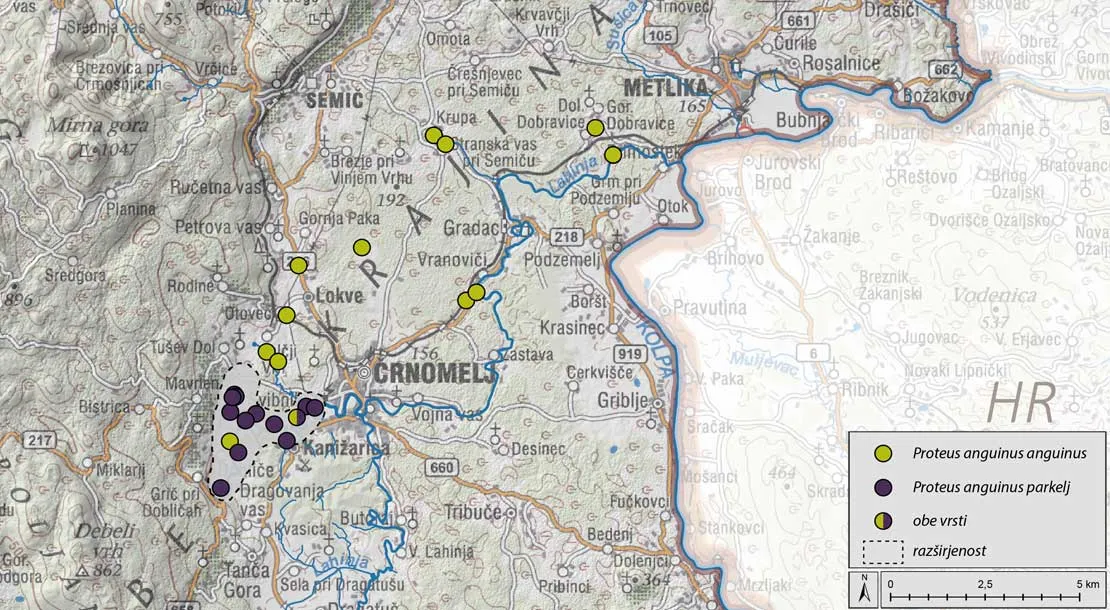
The black olm is an aquatic amphibian of the family Proteidae and the largest cave-dwelling animal. It lives exclusively in the shallow karst of Bela Krajina, within an area of approximately 10 km², making it of exceptional scientific and conservation importance.
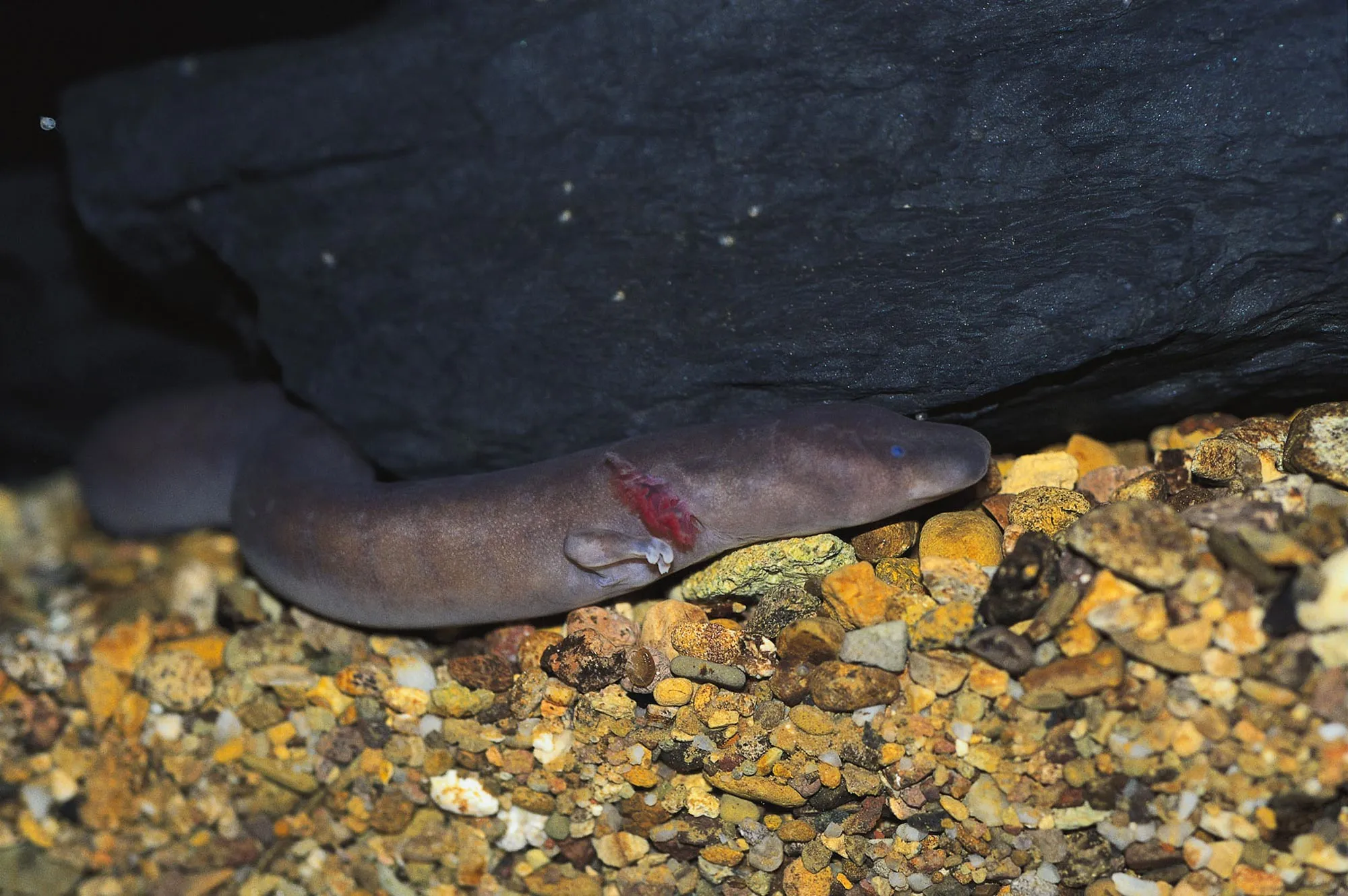
Among cave animals it is unusual in having retained functional eyes and pigmented skin. Nevertheless it is highly adapted to subterranean life: it navigates in darkness using well-developed sensory organs and surfaces mainly at night at karst springs, where it feeds on small crustaceans and snails.
The subspecies was first discovered on 18 October 1986 at the Dobličica spring; a second specimen was found in Jelševnik in 1990. Biologists Boris Sket and Jan W. Arntzen formally described it in 1994 as Proteus anguinus parkelj.
The black olm is a reminder that the quality of groundwater is directly linked to the preservation of unique life beneath our feet.
Visual archive of the species
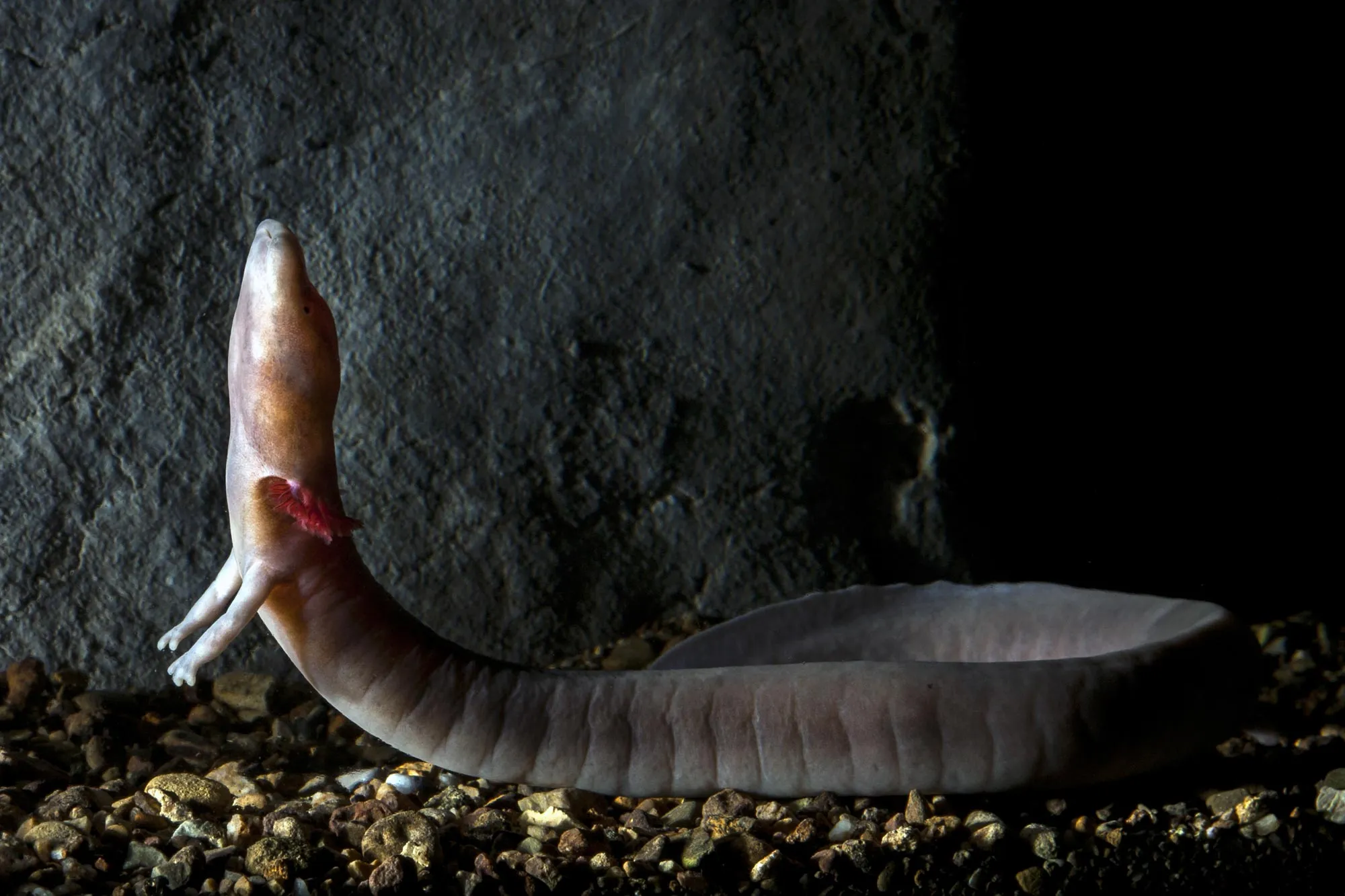
Selected photographs document the habitat, research and key moments in the conservation of the species in the Bela Krajina karst.
Content summaries are based on data from crni-moceril.eu (captured in an internal corpus).
Discovery
Discovery
From the first sighting in 1986 to the formal scientific description of the subspecies in 1994.
→Subspecies description
Subspecies description
Why the black olm is an evolutionary outlier among cave animals.
→Habitat
Habitat
Underground waters of the Bela Krajina karst plain, with a very restricted range.
→Threats
Threats
Pollution, nitrates and legacy contamination directly affect the population.
→Info centre
Info centre
Jelševnik as a place for education, exhibitions and natural history programmes.
→Black Olm
The black olm (Proteus anguinus parkelj) is an endemic species of the underground waters of the Bela Krajina karst plain. Learn about its biology, habitat and the key reasons for protecting the species.
Plan a visit to the info centre