
Impacts on the population
Threats
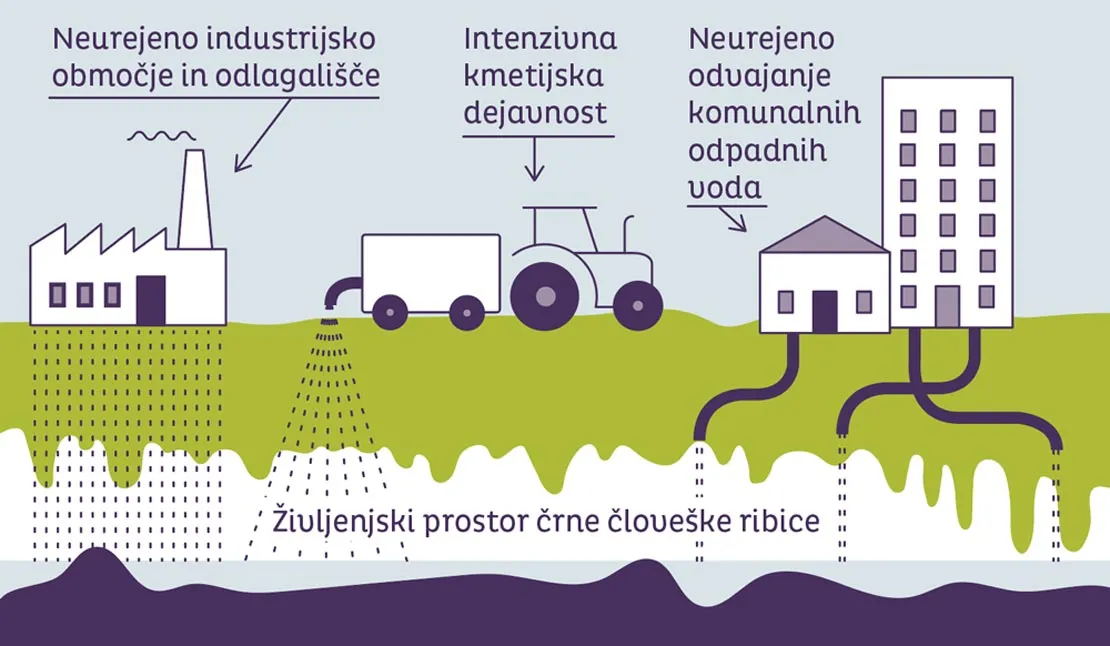
The status of the black olm population is estimated to be critical, primarily due to the combination of a very restricted range and local pollution sources.
Estimates based on DNA analysis indicate that the entire population numbers only a few hundred to a few thousand adult individuals.
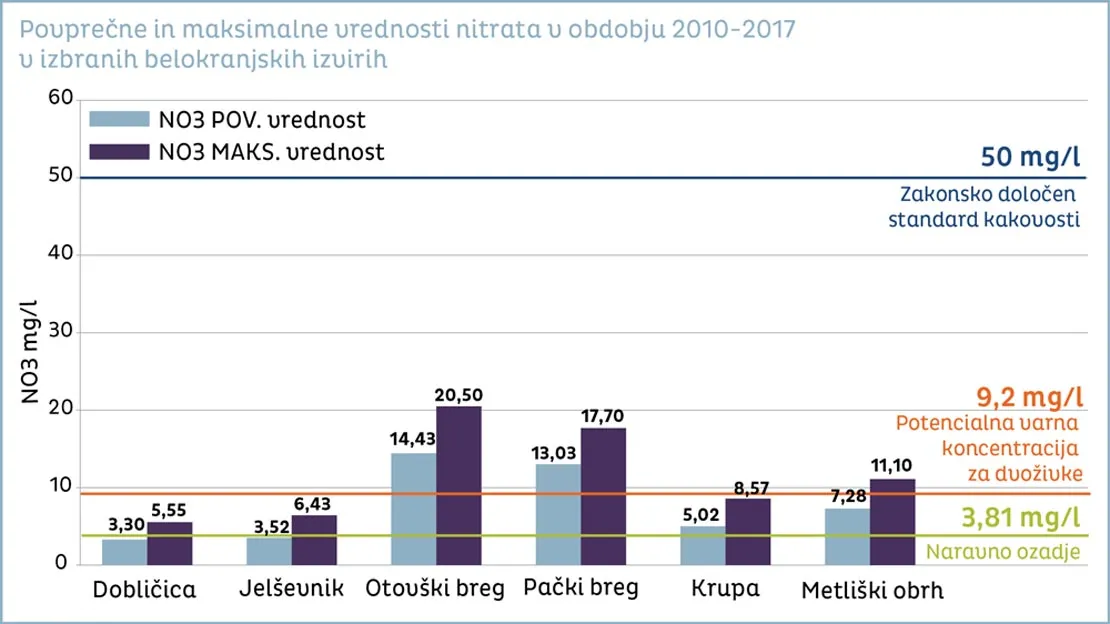
Elevated nitrate concentrations are proven to contribute to amphibian decline; safe concentrations for the olm are below the threshold of 10 mg NO₃/l, while the legal limit for drinking water is 50 mg NO₃/l.
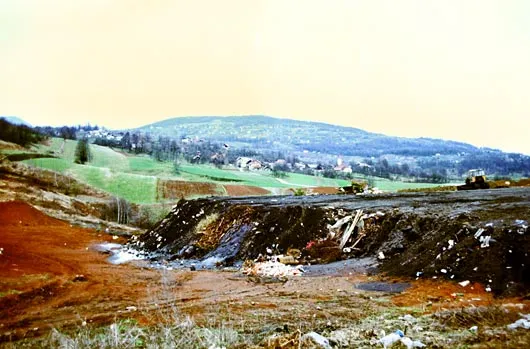
Legacy contamination (e.g. foundry sands, PCB pollution) demonstrates that the consequences of improper waste disposal on karst terrain can persist for decades.
For the black olm, protecting the species cannot be separated from protecting the water: they are the same system and the same responsibility.
The most significant threats
-
Intensive agriculture and leaching of artificial fertilisers and pesticides.
-
Industrial and municipal waste on karst terrain.
-
Illegal construction and the difficulty of monitoring local pollution sources.
-
Excessive extraction of groundwater.
-
Long-term accumulation of toxic substances in organisms.
Impacts on the population


Threats
The key threats to the survival of the black olm: pollution, nitrates and legacy contamination.
Plan a visit to the info centre