
Biology and adaptations
Subspecies description
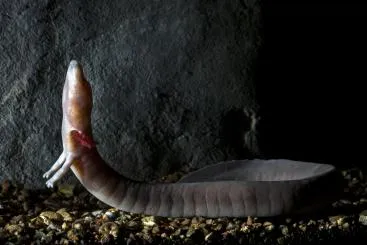
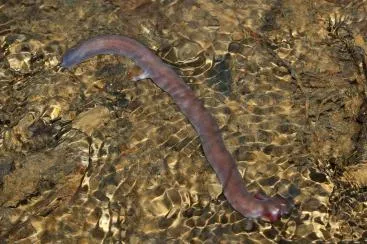
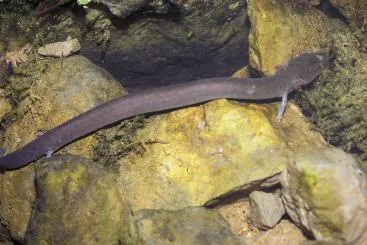
The black olm is unusual among troglobionts in having retained functional eyes and pigmented skin.
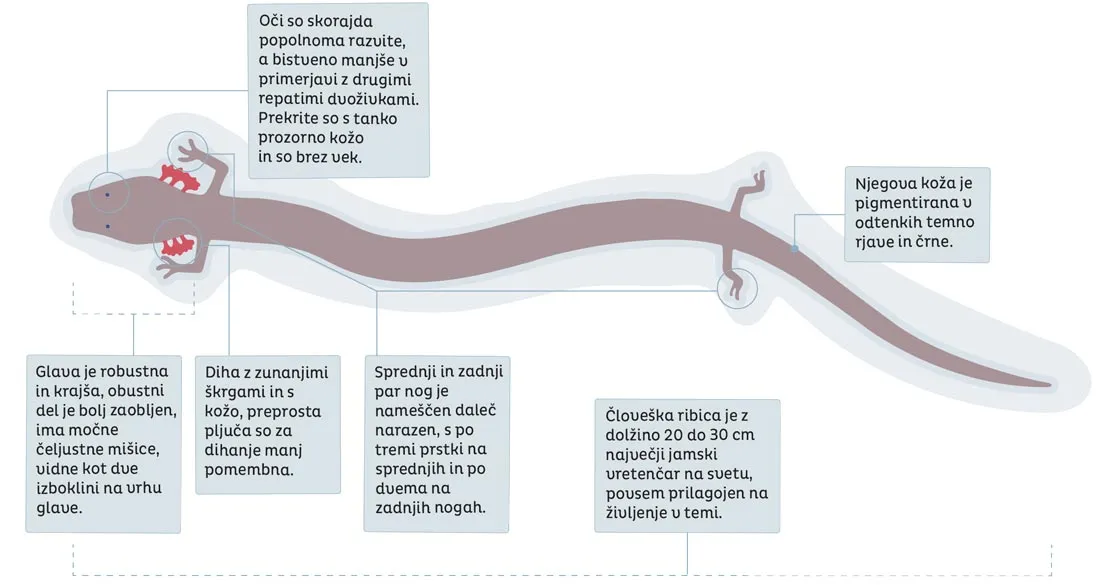
Troglobionts are species adapted to life underground, where constant temperature, absence of light and limited food sources prevail.
Most cave animals lack pigment and have vestigial eyes; in the black olm some of these features are retained, indicating a different evolutionary response to the environment.
Despite its retained eyes, the species remains strongly tied to the subterranean aquatic environment and is sensitive to changes in water quality.
It is precisely the combination of cave adaptations and retained 'surface' traits that makes the black olm so scientifically fascinating.
Key features of the subspecies
-
Aquatic amphibian of the family Proteidae.
-
Pigmented skin and retained functional eyes.
-
Neoteny: retains larval characteristics throughout its entire life.
-
The largest cave-dwelling animal in Europe.
Biology and adaptations
Subspecies description
Morphological and ecological features of the black olm compared to other cave species.
Plan a visit to the info centre